It may be the fifth-largest city in Britain, but by the 1970s, Sheffield’s main sources of interest were knives, forks, snooker, and football.
But while London had long been regarded as the main – and, by many Londoners, the only – source of musical talent in the rock world, suddenly Manchester, Liverpool and Sheffield (and other regional cities) began to be recognised by the public and record companies alike as more rewarding breeding grounds for new talent.
Just as Merseybeat spread from Liverpool in the 1960s, so too did interesting new ideas from the North influence the British pop scene.
For 20 years, Sheffield had been regarded as a second-rate rock city. In fact, the only really notable act to have come from Sheffield had been Joe Cocker, and that was over ten years ago.
But since the punk revolution of 1977, new acts sprouted from the woodwork with bewildering regularity, inspired by the knowledge that no matter how cheap or unusual their equipment was, they would get an audience willing to give them a chance.
They realised the public were bored with proficient but uncommitted rock groups. Eventually, the record companies caught up with the public and discovered, yes, talent did exist north of the Watford Gap.
The Sheffield scene was sparked by (ironically) the London punk scene in the hot summer of 1977. Within the space of three months, fanzines had become commonplace, and with them a gradual realisation that the people up on stage weren’t “Rock Stars” but “Human Beings”, and that all you needed was gall and (preferably) some musical talent.
Two years on, this initial courageous attitude gave birth to several unique and highly creative groups, who owed less to the expectations of the rock press and more to their immediate surroundings and experiences.
Cabaret Voltaire set about experimenting with DIY electronics and tape machines, as well as Dada-influenced performance art, generating music that would eventually lay the foundations for the UK’s electronic music scene.

The Human League combined an all-synthesiser line-up with a light-hearted, entertaining approach, including a synchronised slide show. They played their first ever gig at the long-gone Wham Bar on Sheffield Hallam Campus in 1978 and rebelled against the convention that electronic groups had to translate the modern world as a dull, depressing and alienating place. Instead, they used a sly, tongue-in-cheek approach that confused many less-flexible people.
The group split in two in 1980, with Martyn Ware and Ian Craig Marsh forming the British Electric Foundation and then Heaven 17, while the rest of Human League signed to Virgin and their 1981 album, Dare, defined technopop (electronic pop) through the early 1980s and made the band world famous. As a result, major labels flocked up the M1.
2.3 were the first of the Sheffield groups to release a record (on Fast Product). Formed in May 1977 by Paul Bower, who was running a Punk fanzine called Gunrubber, their melodic guitar-bass-drum sound, combined with often witty, sarcastic lyrics, produced a potentially very successful end product. Unfortunately, they collapsed under numerous personnel changes.

ABC, led by Martin Fry, united punk sloganeering with lushly romantic lyrics and strings.
Dyed-in-the-wool heavy metal fans, Def Leppard decided they could do it as well as their idols. They were right. Led by Broomhill-born frontman Joe Elliott, they became one of the prime movers of the New Wave of British Heavy Metal (NWOBHM) movement in the 1980s and left an indelible mark on the global music scene.
The Comsat Angels were defined by the same mix of high-tensile guitar, militaristic beats, moody keyboards and strained vocals as bands like Joy Division, PiL, Wire and Gang Of Four, but sadly were always overlooked.
Sheffield’s most eccentric punk offshoots, They Must Be Russians (who had a namesake operating in London – both took the name from a Sex Pistols interview), rarely retained the same line-up or instrumentation but did manage to release a 4-track EP on their own label.

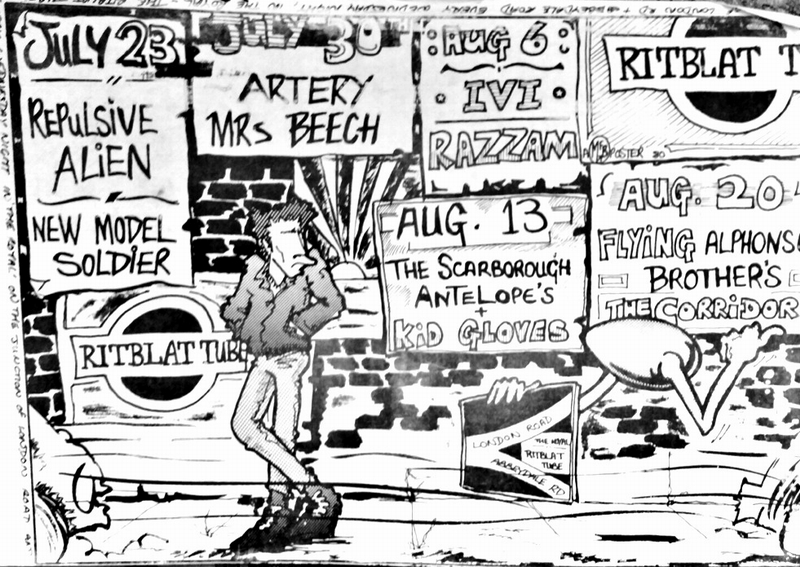
Other less-known Sheffield bands included punk bands The Parts, The Stunt Kites, The Defective Turtles and Disease; electronic bands Vice Versa (who became ABC) and Clock DVA (the electronic music revolution had a solid base in Sheffield); The Deaf Aids, who played excellent R’n’B-influenced covers and original songs; Artery (accomplished, serious musicians); Xero (sparkling, exciting and surprisingly melodic); the excellent jazz-funk Mindgames; the sixties sound of Jump, the instrumental experimentation of De Tian; the mod revival band The Negatives; the bravely named and unique I’m So Hollow; The Prams; Hobbies of Today (from Mexborough); Mein Glas Fabrik (Peter Bargh and Mark Holmes); Red Zoo; Chakk; Extras; B Troop; Repulsive Alien; Veiled Threat (from Worksop); Molodoy; TV Product; The Toy Shop; Vena Cava; Pagan Bo; Graph; Surface Mutants; Shy Tots; The Naughtiest Girl Was a Monitor; AC Temple; The Danse Society; In The Nursery; Ipso Facto; One Thousand Violins; The Flight Commander; Fishwives, and The Wacky Gardeners,

The Black Swan on Snig Hill (later the Mucky Duck and The Boardwalk) was at the heart of Sheffield’s burgeoning punk rock movement (The Clash played their first-ever gig there, sharing a bill with the Sex Pistols and Buzzcocks), while iconic (now demolished) West Street music venue The Limit became the home of the city’s electro-revolution and hosted gigs from everyone from Siouxsie and the Banshees to U2.
The fine musical legacy of the steel city ultimately spawned artists like Pulp, Longpigs, Babybird, The Arctic Monkeys, The Long Blondes, Richard Hawley, Reverend & The Makers and Milburn.
Video
Trending Products
![NOW Country Classics: 90âs Dance Party[Lemon & Spring Green 2 LP]](https://m.media-amazon.com/images/I/61hVquUofcL._SL500_._SS300_.jpg)