A lot of people, myself included, love the non-soda orange flavored beverage that McDonald’s serves. I am being generic here on purpose because the history of the drink itself is not as straightforward as it might seem. While many will refer to it as Hi-C Orange, Orange LavaBurst, Orange Drink or a combination of those thing, historically only two of those things are the same. So when I go to McDonald’s to get an Orange LavaBurst nowadays, I might like it, but its very different from Orange Drink I was served as a kid.
Before Hi-C became the non-carbonated orange flavored drink at McDonald’s they had been serving an orange drink of their for decades. This was a beverage outside of their partnership with Coca-Cola. Not only would people find it in stores, but McDonald’s Orange Drink or Orangeade could be found at community and local sporting events usually in these large McDonald’s branded dispensers outside the restaurants. It’s been gone long enough now that its hard to remember, but it did taste different than what we can get now.
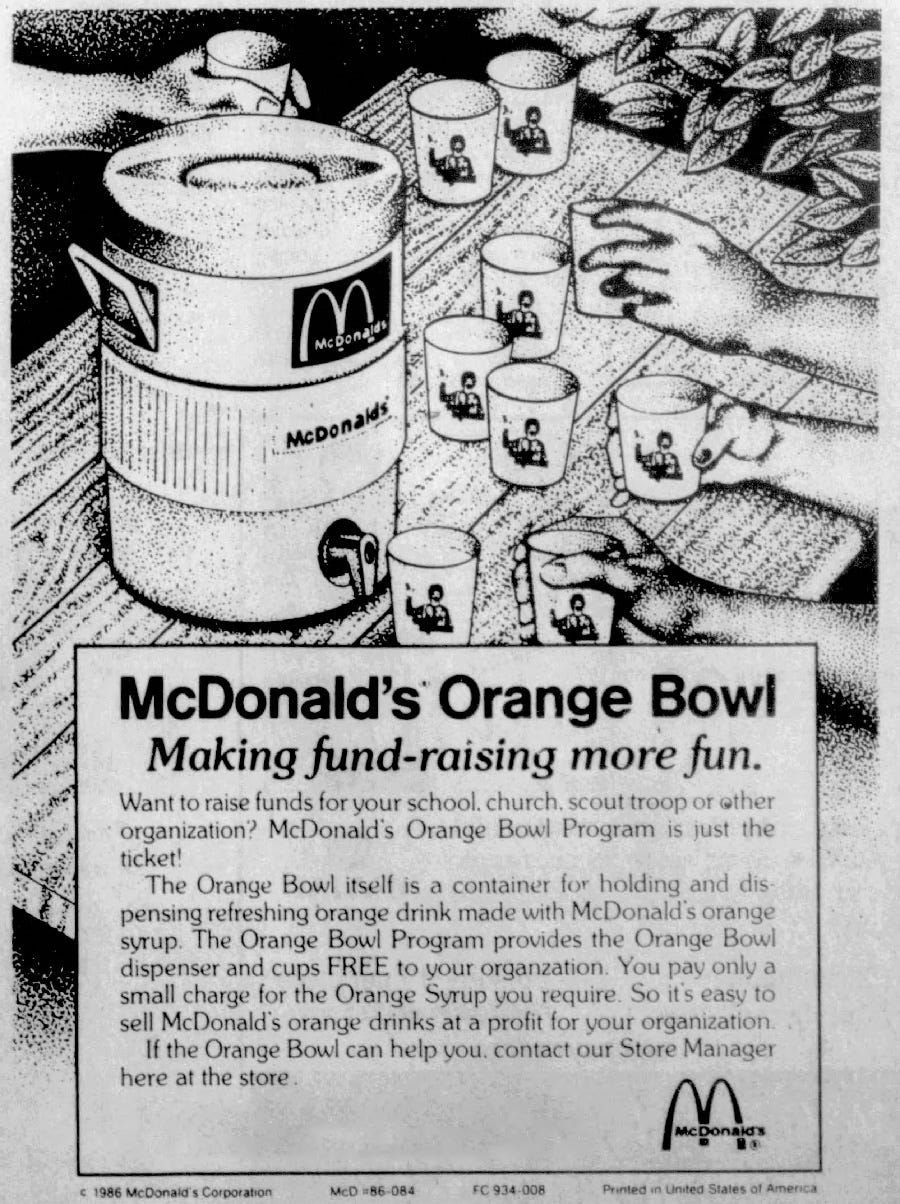
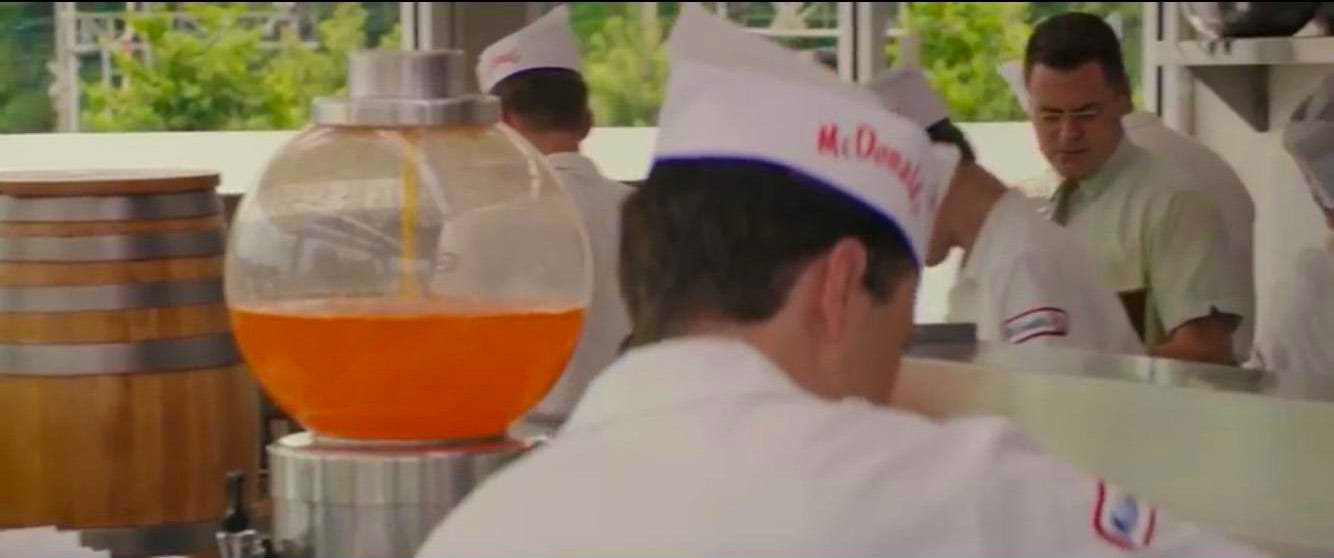
Even if you preferred getting a Coke or a milkshake you might have tasted orange drink outside of the restaurant. The company would loan out these large dispensers that would come to be called Orange Bowls. But they are really just insulated beverage dispensers with a spout. McDonald’s would supply the “bowl” but groups would buy the orange syrup that you would mix with water and ice. Just as an aside, at the restaurants themselves, the containers were so much cooler. Here you can see one in a recreated McDonald’s in the film, The Founder.
You can find a lot of former McDonald’s employees online who remember mixing up the stuff. The syrup mixture came in one gallon containers. You would add that to four gallons of water to get five gallons of finished Orange Drink. I know someone must have tasted the pure syrup, but I can’t find anyone who mentions it. Maybe I am just a curious person, but I want to know what it tasted like.
Now you might be surprised to know that the drink did have at least some real orange in it. Although it was mainly a sweetened orange flavored drink. I found a booklet online that listed the ingredients. The drink contained corn sweetener, sugar, citric acid, concentrated orange juice, and natural and artificial flavoring and coloring. In addition, it included vegetable gum, vegetable oil, glycerine, and glyceryl abietate and sodium benzoate for stabilization.
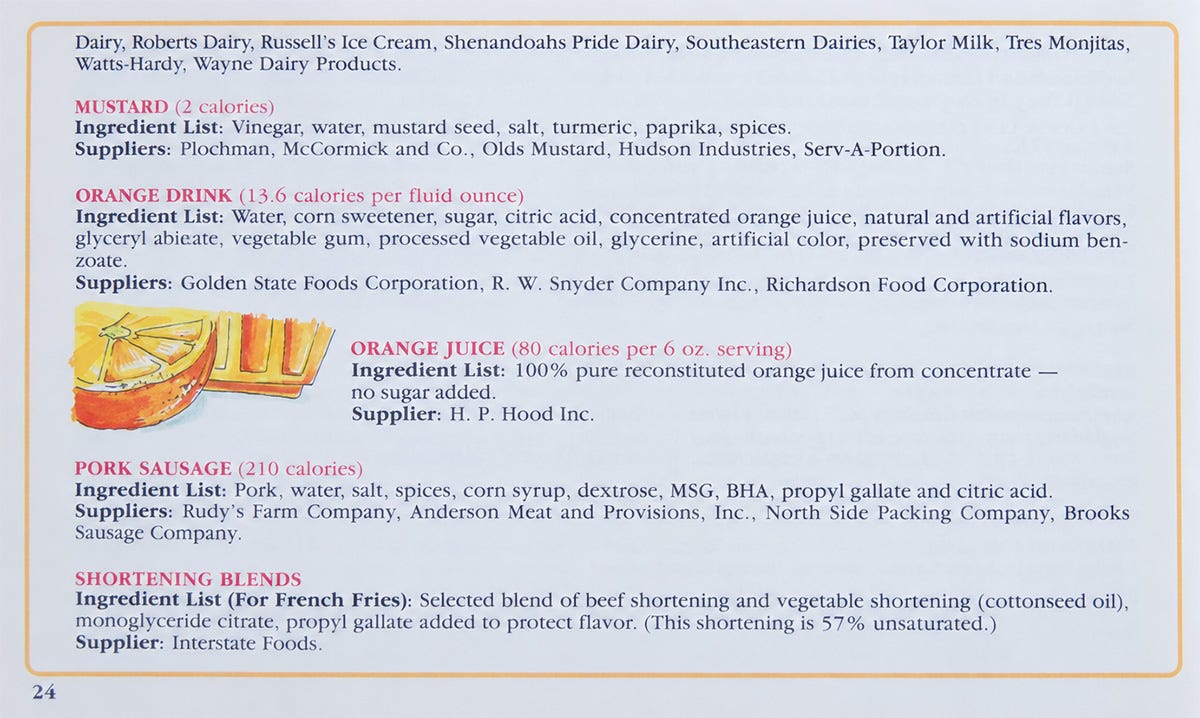
Since the drink was not from Coca Cola, the company needed other suppliers, and I found a few names have popped up like R W Snyder Company, Richardson Food Corporation and Golden State Foods. Golden State Foods looks like the most likely chief supplier of the syrup starting in the 1970s. Before that I believe they allowed regional providers to do the work. Which might explain why I have a challenging time finding a confirmed single source.
McDonald’s was still serving Orange Drink as we moved into the 1990s. Then in 1993, without a ton of fanfare, they switched to Orange Hi-C. I would like to say I was one of the people who protested at the time, but I hardly noticed. When I did order an Orange Drink though, I could tell that things had changed. I wasn’t happy, but I also kind of like Hi-C. So I wasn’t exactly unhappy. Which is how I think a lot of people felt.
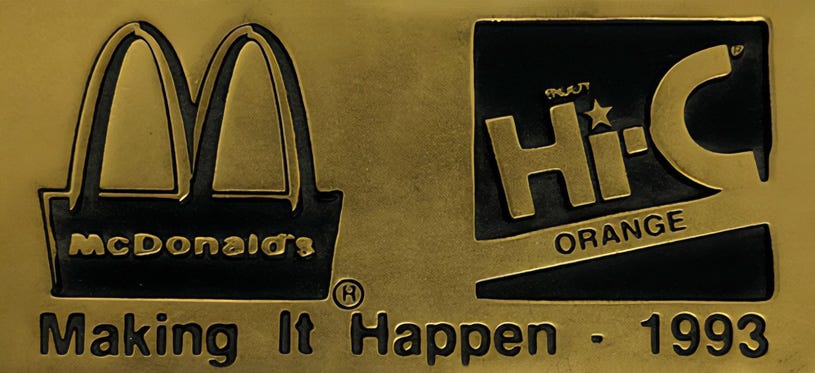
Why did they change? I am guessing the relationship with Coca-Cola was a big part of it. I can’t find any documentation, but I imagine they didn’t like seeing any beverages that weren’t a part of their company. McDonald’s did have a habit of sticking with established products that worked. A good example would be 7-Up which wouldn’t be replaced with Coca-Cola’s alternative, Sprite, until the 1980s. Whatever the case, the switch happened and while it might linger for a while longer in other countries (like Canada), eventually the old Orange Drink went away completely.
Still, while Hi-C might not have the brand recognition of Coke, it was a real brand. So McDonald’s was able to offer something to its customers where they might have some amount of outside recognition. Coca-Cola was also a large and dependable supplier with international reach. Allowing them to replace orange drink would give McDonald’s something it also craves, consistency.
Orange Hi C would eventually get a new name, Orange Lavaburst and Hi C stayed on the menu for nearly 25 years. Then in 2017, McDonald’s told its franchisees that they would no longer be serving the Hi-C product. McDonald’s wanted the fountain space for a new exclusive Coca-Cola product called Sprite TropicBerry. When asked for a reason, the company didn’t cite poor sales, but instead gave the generic answer of “sometimes we change our menu.”
While Lavaburst might not have been a top menu item, it had its fans, and they began to complain. There were petitions, years of social media requests, and repeated demands that McDonald’s bring it back. Most of the time, this kind of consumer pressure goes nowhere, but on February 10, 2021, the company announced it would be returning almost immediately Two weeks later I had my first ice-cold Lavaburst in 4 years and I was thrilled.
The history of un-carbonated orange beverages is long and has changed over the decades. A lot of people don’t even realize that the drink is different and I think that is because the history isn’t well documented. Even McDonald’s in their press release for the return of Orange Lavaburst stated wrongly, “The loyal fandom of this deliciously fun and fruity beverage that teases your taste buds dates back to 1955, when it first debuted on McDonald’s menus.” It’s good stuff, but it’s not the same beverage a lot of people grew up with and I think that’s worth remembering.
Trending Products